October 15, 2026 | MCB, MCCB and RCCB
MCB, MCCB and RCCB Explained: Which One Should You Choose?
If you've ever looked inside an electrical panel and wondered what all those switches are for, you're not alone. Three of the most common devices you'll come across are the MCB, MCCB and RCCB. They all look similar, they all sit in the same distribution board, and they all play a role in electrical circuit protection — but they don't do the same job.
Understanding MCB vs MCCB vs RCCB isn't just useful for electricians. If you're building a house, setting up a workshop, or managing a commercial space, knowing which device to use — and where — can save you money and, more importantly, keep you and your property safe.
Let's break it down in simple terms.
What are MCB, MCCB and RCCB?
Before comparing them, it helps to know what each device actually does on its own.
What Is an MCB?
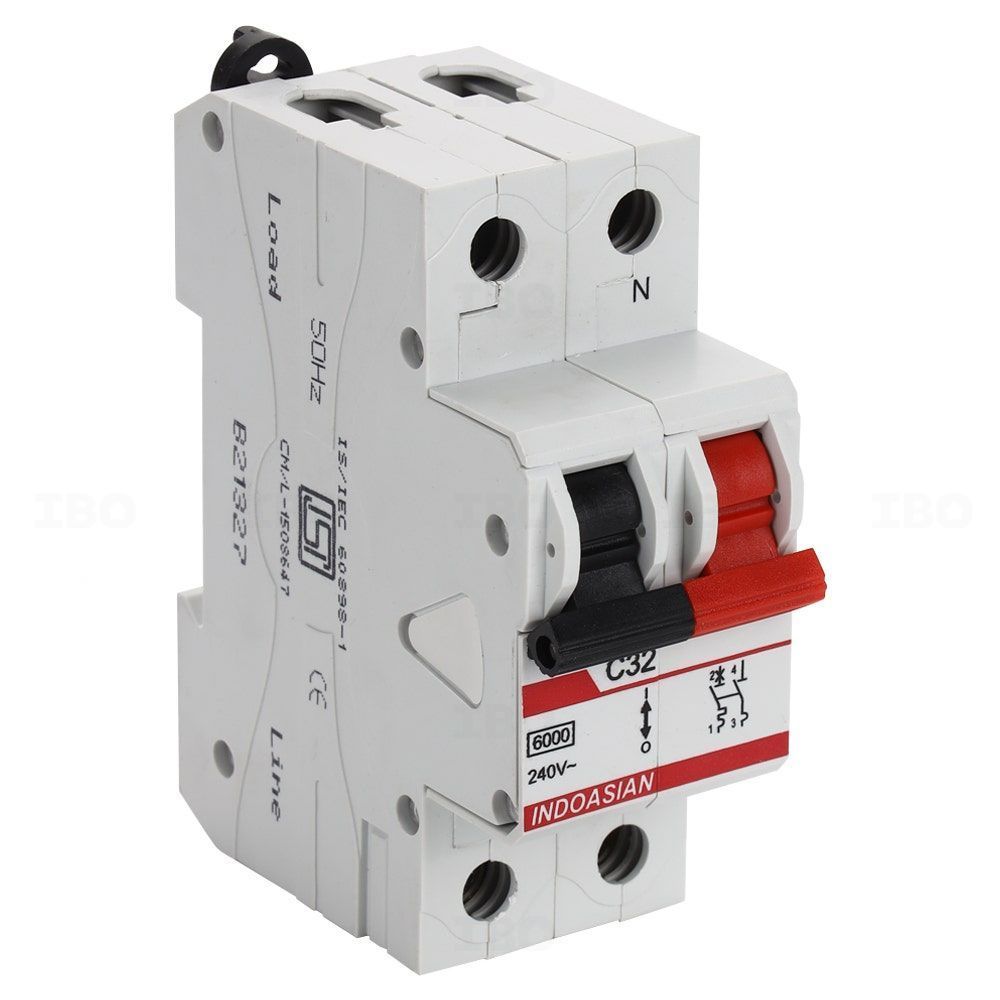
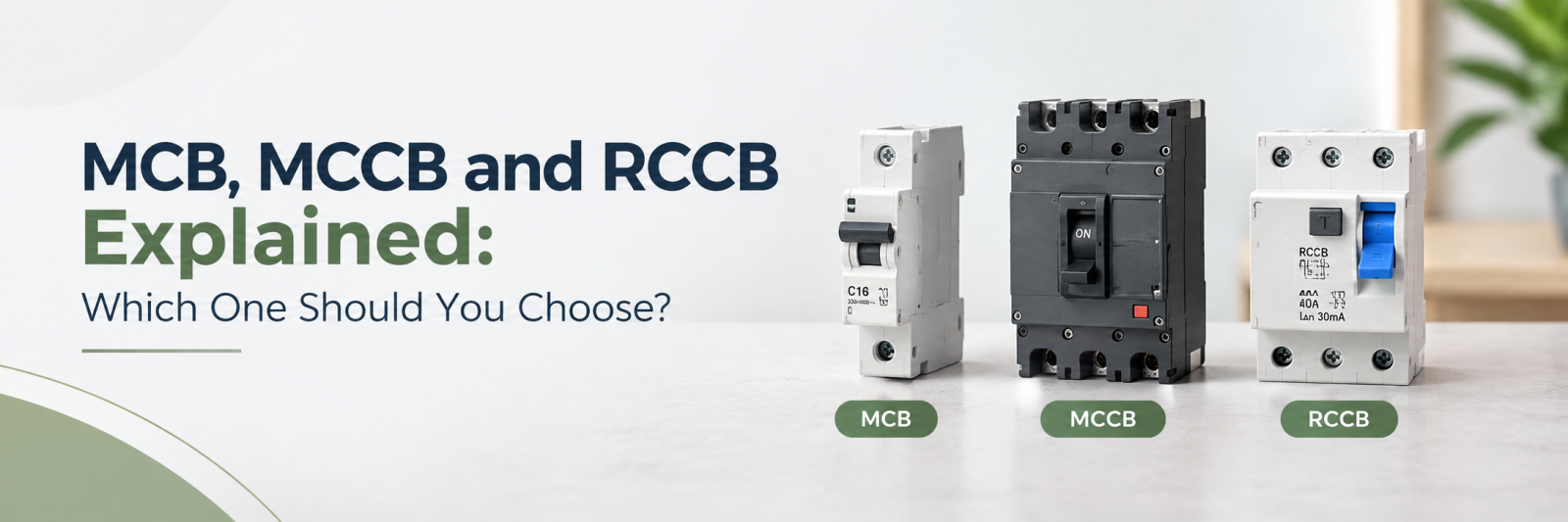
An MCB (Miniature Circuit Breaker) is a small switch that automatically cuts off the power when it detects excess current flowing through a circuit. This usually happens due to an overload or a short circuit. Think of it as an upgraded, reusable version of the old fuse — instead of replacing a burnt fuse wire, you simply flip the switch back on once the fault is cleared, offering reliable overload protection and short circuit protection in one compact device.
MCBs are commonly used in homes and small offices because they're compact, affordable, and easy to handle. Most residential distribution boards you see today use MCBs for individual circuits like lighting, sockets, and appliances.
What Is an MCCB?
An MCCB (Molded Case Circuit Breaker) works on the same basic principle as an MCB, but it's built for much higher current ratings — anywhere from 63A up to 3000A. It's also adjustable, meaning you can set the trip current according to your load requirements, which an MCB doesn't usually allow.
Because of its higher capacity, an MCCB is typically used in industrial setups, large commercial buildings, and main distribution panels where heavier loads need dependable short circuit protection.
What Is an RCCB?
An RCCB (Residual Current Circuit Breaker) is a bit different from the other two. Instead of protecting against overload, it focuses on earth leakage protection and protects people from electric shock. It constantly monitors the current going into a circuit and the current coming back out. If there's a mismatch — even a small one, caused by current leaking through a person's body or faulty insulation — the RCCB trips instantly.
This makes the RCCB a life-saving device, especially in areas prone to earth leakage, like bathrooms, kitchens, or outdoor wiring.
MCB vs MCCB vs RCCB: Key Differences
Now that you know what each device does, let's compare them side by side.
Difference in Protection
- MCB protects circuits from overload and short circuit conditions.
- MCCB offers the same protection as an MCB, but for higher current capacities, with adjustable trip settings for more flexibility.
- RCCB protects people from electric shock by detecting current leakage, providing dedicated earth leakage protection where MCB and RCCB devices differ the most.
This is an important point people often miss — an RCCB doesn't replace an MCB or MCCB. For complete electrical safety, most panels actually use MCB and RCCB together, or MCCB and RCCB together in larger installations, so that overload protection and earth leakage protection work side by side rather than one substituting for the other.
Difference in Applications
- MCB: Best suited for low current circuits, typically up to 100A. Common in homes, small shops, and light commercial spaces.
- MCCB: Designed for higher current circuits, up to 3000A. Used in industries, factories, and large commercial buildings where load requirements are high.
- RCCB: Used wherever there's a risk of electric shock — bathrooms, outdoor connections, water heaters, and any area with exposure to moisture.
How to Choose the Right One?
Choosing between MCB, MCCB and RCCB isn't really about picking one over the other. In most setups, you'll actually need a combination of them to cover both overload protection and earth leakage protection. But here's a simple way to decide what fits where.
When to Choose an MCB
Go for an MCB if you're setting up a home or small office circuit with a current rating under 100A. It's ideal for lighting circuits, plug points, and everyday appliances where the load is predictable and doesn't fluctuate much.
When to Choose an MCCB
If you're dealing with heavier loads — think industrial machinery, large HVAC systems, or a commercial building's main incoming supply — an MCCB is the better choice. Its adjustable trip settings also make it more suitable for setups where load requirements might change over time.
When to Choose an RCCB
An RCCB should be installed wherever there's a risk of earth leakage or electric shock, regardless of the load size. This includes bathrooms, kitchens, outdoor sockets, and any circuit connected to water-based appliances. In fact, many electrical codes now recommend RCCBs as a mandatory safety addition alongside MCBs in residential wiring.
Why Choose RR Enterprises?
- 35+ years of experience in electrical and automation supply across Bangalore
- Authorized distributor of trusted brands like Lauritz Knudsen (formerly L&T), Legrand, and Finolex
- Genuine, certified products — MCBs, MCCBs, RCCBs, and complete switchgear solutions under one roof
- Technical support to help you choose the right device combination for your load and safety requirements
No. 5, Old No. 148, 1st Cross Mallikarjuna Street, B.V.K Iyengar Road Cross, Bangalore – 560053
+91 98802 55442 | +91 93420 15333 | 080-4124 9523